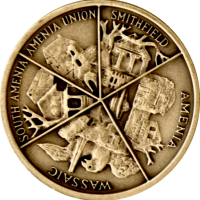

Postcard Image of the Wassaic Charcoal Kilns, c. 1907

3/22/22 Charcoal Kiln Covered in Vines

3/22/22 Inside View of Charcoal Kiln
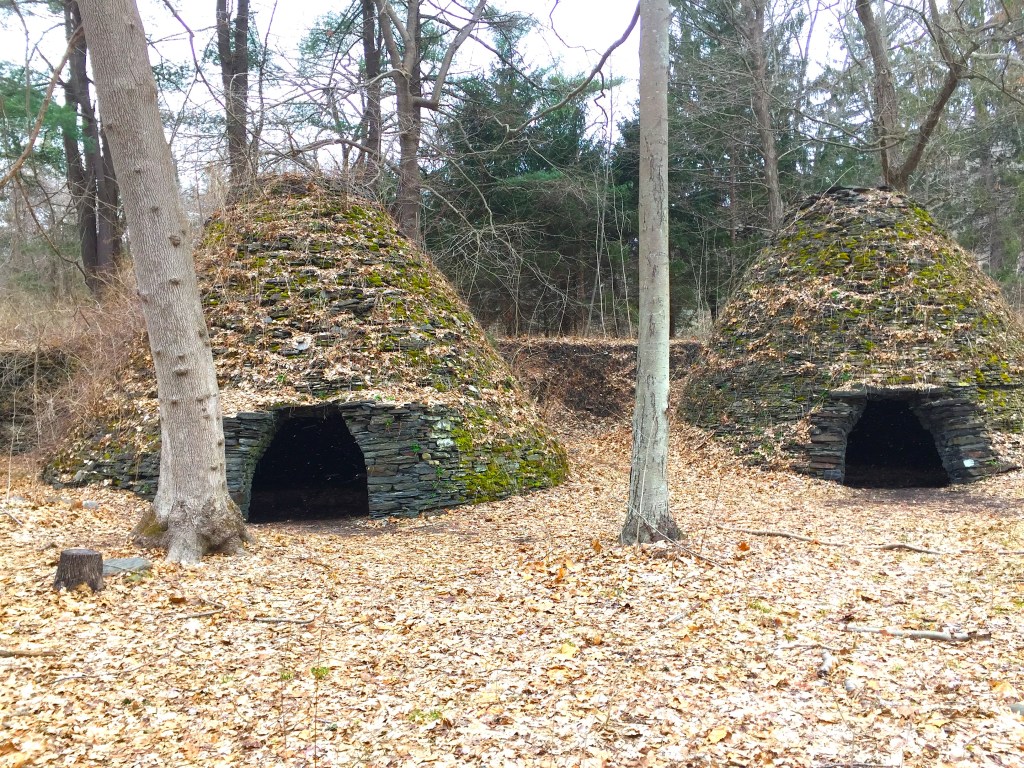
Kilns with Retaining Wall Behind


8/6/23 Work of Restoration Underway
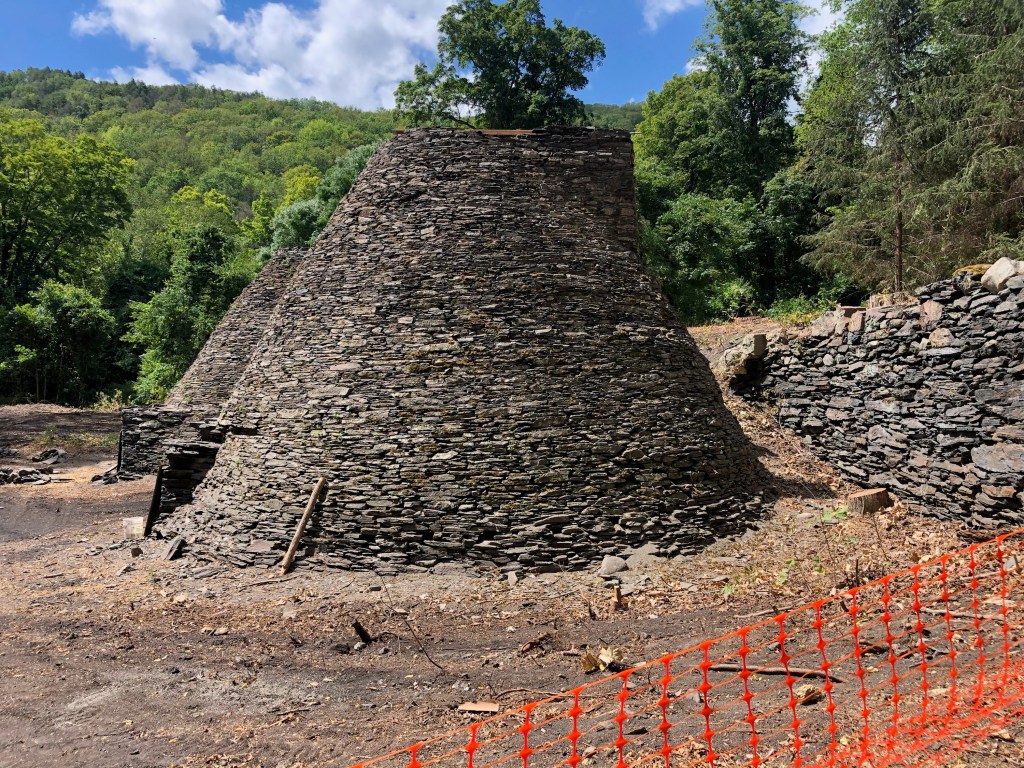
Restoration of Kilns Nearly Completed

Removal of Trees that Endangered the Kilns
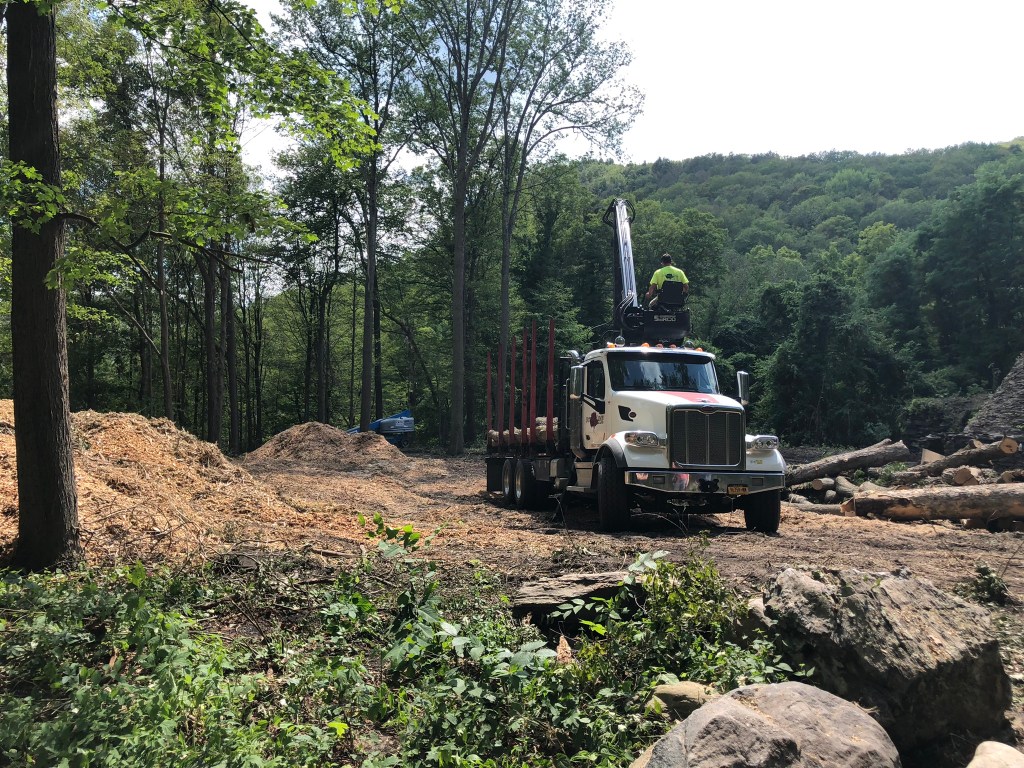
Removal of Trees

An Incredible Job of Reconstruction
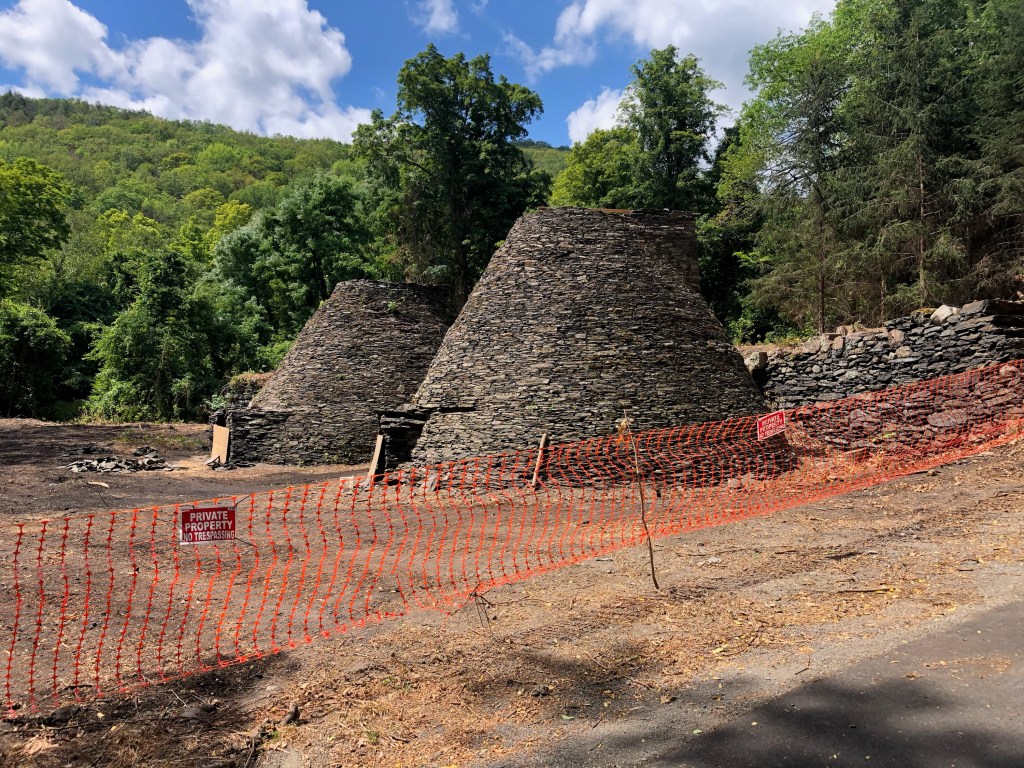
Preparing the Grounds for Public Access

Gate at Roadway on Deep Hollow Road
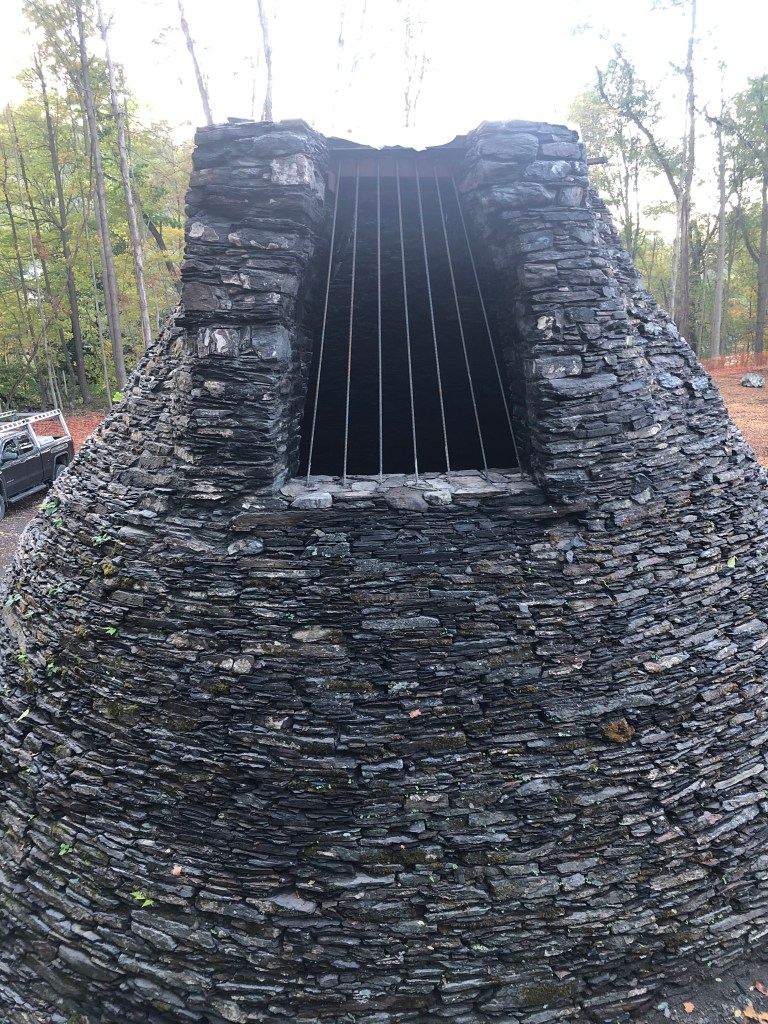
Upper Loading Opening Closed Off for Safety Concerns

Lower Opening Closed Off for Safety Concerns

Fencing as Boundary for Viewing Charcoal Kilns
The Importance of Preserving the Wassaic Charcoal Kilns
The Salisbury Iron District covered a geographical region from Pittsfield, MA, to Pawling, NY. The Iron Industry in this region began with the discovery of high quality iron ore in Salisbury, CT, in 1731 and continued until the early 1900s.
Although iron ore was being mined in Amenia before the Revolutionary War, it was not until 1825, when Nathaniel Gridley and his son Noah Gridley began the Gridley Iron Works in Deep Hollow, that the iron industry became a primary source of employment and economic growth in the town.
It was in 1825 that Josiah M. Reed and Leman Bradley of Sharon, CT, assisted the Gridleys with the construction of a blast furnace for the production of iron bars called “pig iron”. The furnace was built on the north bank of the Wassaic Creek, where the present day Route 22 crosses the creek. Nearby, the construction of three stone charcoal kilns was undertaken by Noah Gridley for the production of charcoal, a necessary ingredient for purifying iron. There were no other such structures in the Salisbury Iron District at that time, nor anywhere in the northeast region.
In 1825, there was no village of Wassaic; there were no houses in the Deep Hollow area. There was no railroad.
“N. Gridley & Son” needed men to fell trees and make charcoal, men to dig the iron ore, men to transport the wood, the charcoal and the ore and men to tend the blast furnace. Gridley hired local men and, also, the Irish immigrants who came to America in the mid-1800s.
The village of Wassaic sprang up and was so named in 1843. Noah Gridley was considered the “Father of Wassaic.” He was also responsible for contacting Cornelius Vanderbilt to request that he extend the New York Central Railroad north from Pawling to Chatham, which finally occurred in 1851.
A decade later, Noah Gridley assisted Gail Borden in establishing the New York Condensed Milk Company in Wassaic. This company employed many workers and encouraged the development of the dairy industry, which continued long after the iron industry ceased to exist.
Noah Gridley and his son Edward Gridley both died in 1887, bringing an end to the Gridley Iron Works. Today, two stone charcoal kilns are still standing. They are the only remaining structures of the iron industry in Amenia.
Without the Gridley’s Iron Works, the Village of Wassaic would not exist, the New York Central Railroad may not have come to Amenia and the other industries of Wassaic that improved the economy of the entire town may never have developed. Therefore, these unique, stone charcoal kilns are of great importance to the history of Amenia and should be preserved.
Elizabeth C. Strauss ~~ Amenia Historical Society ~~ July 20, 2023
 Amenia Historical Society